AI-generated image

Payments clear. Invoices go out. Money arrives. On paper, the transaction is complete. But what happens behind the scenes?
That single moment—when a finance team shrugs and says, 'That’s just how the system works'—rings so true it’s almost painful. The reality is, payments aren’t broken because they fail. They’re broken because the systems around them don’t talk. An invoice lives in one world, the payment processor in another, the bank deposit somewhere else, and accounting in yet another dimension entirely.
In my experience coaching founders, I’ve watched time and again as finance teams waste days reconciling what should be automated. A customer pays via wire, combining five invoices and two credits, and suddenly, someone’s job is to reverse-engineer that deposit. No system connects the dots. Humans do.
The insight here is subtle but powerful: innovation has focused on moving money faster, not understanding it better. We’ve optimized checkout speed and global reach while leaving finance teams buried under manual reconciliation. That’s not progress—it’s displacement.
What if, instead, the context of a payment—what it's for, how it breaks down, which fees apply—traveled with it? What if systems learned over time, recognized patterns, and auto-matched payments to invoices without human translation?
This isn’t fantasy. It’s an urgent shift. As pricing models grow more complex—from subscriptions to usage-based billing—the cost of manual reconciliation scales painfully. Leaders who treat payments as a full-cycle process, from order to reporting, aren’t just improving efficiency—they’re building finance teams that can actually keep up.
We don’t need to accept workarounds as permanent. Once you stop saying 'that’s just how it works,' you start asking, 'how should it work?' And that’s where real change begins.
Read the full piece to understand why the next frontier in payments isn't speed—it's clarity.
This post has originally been written by Forbes Magazine on Fri, May 22, 26. Find the original post here at Forbes Magazine

Connie Harrell
Working with investors and entrepreneurs to gain the best ROI possible.
Related Posts

The Builders Stage brings practical strategies ...
The Builders Stage at TechCrunch Disrupt 2026 cuts through the AI hype with real talk on scaling,...
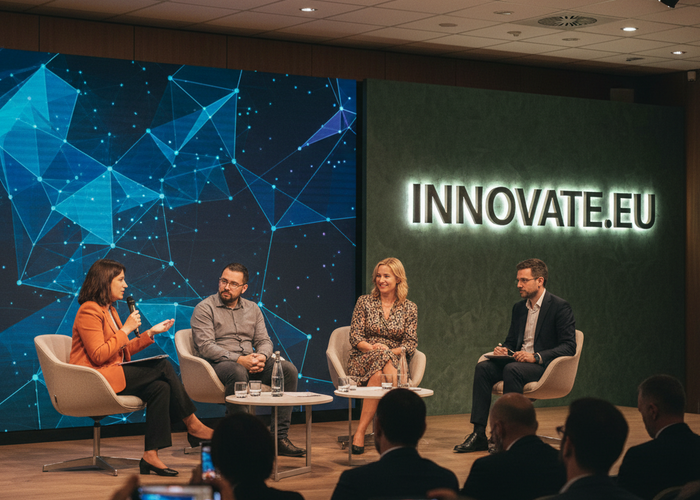
At TechBBQ, Europe’s AI conversations kept comi...
Europe’s AI future isn’t just about technology — it’s about control, sovereignty, and who gets to...

Check Your Sight Lines
The best opportunities often hide in plain sight—just outside the mainstream. Are you looking wid...

Seed Funding Records Fall as Callosum Lands Ato...
A $100M seed round isn’t the norm—here’s what it really means for founders raising today.

Why The Best Seed Deals Are Already Repriced By...
Speed has rewritten the rules of seed investing—access and action now matter more than capital.

Why Jennifer Garner Is Doubling Down On Her Org...
Jennifer Garner on staying mission-focused after taking Once Upon A Farm public.
0 comments