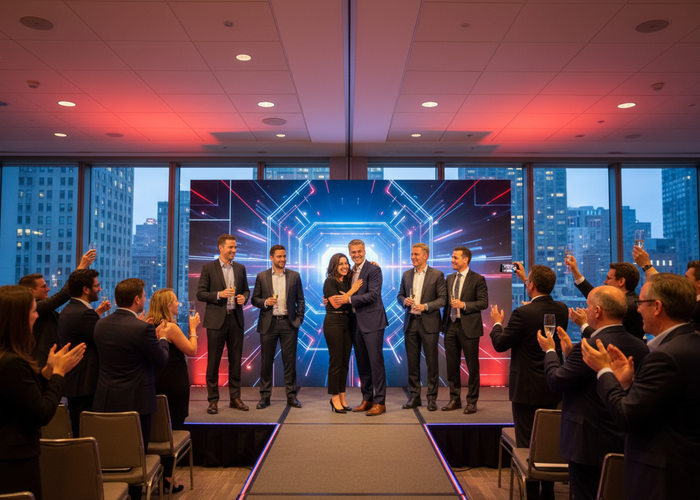
AI-generated image

Timing isn’t everything in venture capital—but it might be the only thing when it comes to AI’s explosive rise. The 2026 Midas List isn’t just a ranking; it’s a testament to the outsized rewards of being radically early. The investors at the top didn’t chase trends. They bet on ideas still dismissed as science fiction: autonomous defense systems, fusion energy, AI models without revenue, and rockets that hadn’t yet reached orbit.
Vinod Khosla didn’t wait for ChatGPT to validate OpenAI—he wrote a $50 million check in 2019 when the company had no product. That move alone could define his legacy. Likewise, Elad Gil was deep into generative AI before most had even heard of GPT-3, backing foundational players like Perplexity and Cognition from the earliest rounds. These aren’t portfolio diversions; they’re concentrated bets on paradigm shifts.
What’s striking across the list is the convergence of once-siloed domains—AI, defense, space, energy. Trae Stephens co-founded Anduril with the conviction that software could rebuild national security. Randy Glein placed early chips in SpaceX and fusion energy, seeing the interdependence long before others. Shaun Maguire, with his physics background, treats frontier tech not as speculative but foundational—'atoms' over just 'bits'.
And it’s not just about backing the biggest names. The real pattern is pattern recognition: investors like Mamoon Hamid and Yasmin Razavi didn’t just jump on AI apps—they mapped the entire stack, from silicon to enterprise software. Razavi’s 'prepared mind' philosophy—deep research before action—explains how she got in early on Anthropic before many saw the opportunity.
In my experience working with founders aiming to attract this caliber of investor, the takeaway isn’t just about brilliance or timing. It’s about conviction in the face of ambiguity. The top names didn’t wait for consensus. They moved before the pitch decks were polished, before the traction charts pointed upward. That’s the edge.
This isn’t a moment—it’s a message. The next wave won’t look like the last. If you’re waiting for the trend to be obvious, the best returns have already happened. For founders building on the edge, and for investors with the courage to follow, the window is narrow but still open. See who’s already inside.
Want to see how these early bets unfolded and who’s shaping the next era? Dive into the full 2026 Midas List.
This post has originally been written by Forbes Magazine on Wed, May 27, 26. Find the original post here at Forbes Magazine

Connie Harrell
Working with investors and entrepreneurs to gain the best ROI possible.
Related Posts

Why The Best Seed Deals Are Already Repriced By...
Speed has rewritten the rules of seed investing—access and action now matter more than capital.

Why Jennifer Garner Is Doubling Down On Her Org...
Jennifer Garner on staying mission-focused after taking Once Upon A Farm public.

Zoom snaps up Seattle startup Common Room to bo...
How Common Room went from stealth to acquisition by Zoom — and what it means for AI in sales
Klaviyo acquires Elias Torres’ Agency in full-c...
A decade after working together at Performable, Elias Torres and Andrew Bialecki reunite as Klavi...

Jason Calacanis Backs Solana as SOL Tests Major...
Jason Calacanis shifts stance on Solana, now favoring product-driven blockchains over pure specul...

How Lightspeed found their newest hire… via Ins...
How Lightspeed is using social media and podcasts to reshape venture capital’s role in the creato...
0 comments