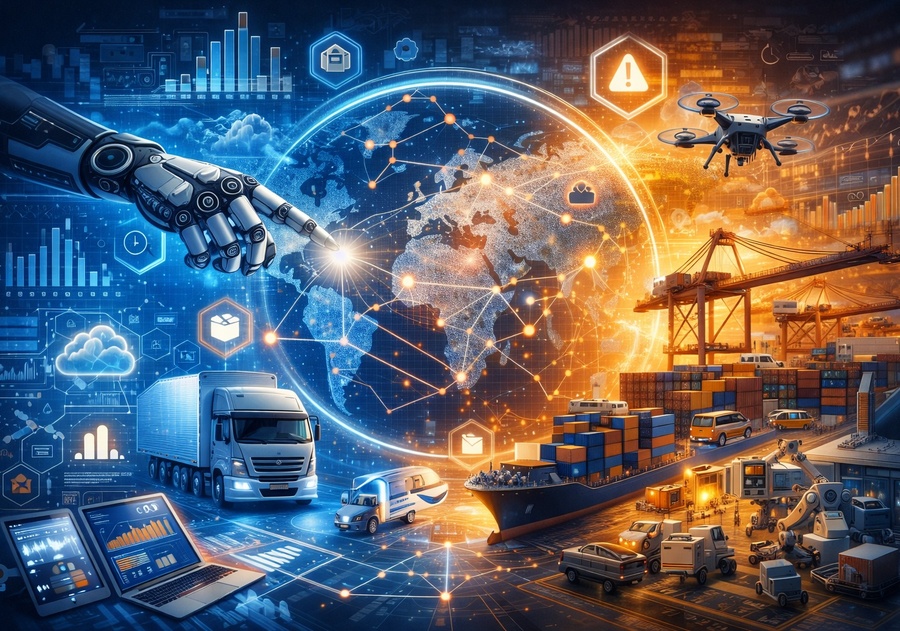
Artificial intelligence has transformed supply-chain logistics in ways that go far beyond automation. It has shifted supply chains from reactive and linear systems into dynamic, predictive, and highly interconnected networks. Here are the most important ways AI has changed the logistics of supply chain management:
⸻
1. Predictive Forecasting and Demand Planning
Traditionally, supply chains relied on historical sales data and periodic forecasting. AI enables continuous, real-time forecasting by analyzing:
• historical demand trends
• market signals and economic indicators
• weather patterns
• social-media sentiment
• point-of-sale data
• supply disruptions and geopolitical events
Machine-learning models identify patterns humans miss and update predictions as new data emerges. This leads to better inventory planning, reduced stockouts, and less excess storage cost.
Impact:
✔ More accurate demand forecasts
✔ Lower inventory carrying costs
✔ Fewer emergency shipments
⸻
2. Real-Time Visibility Across the Entire Supply Chain
AI has enabled “control-tower” visibility—centralized platforms that integrate data from suppliers, warehouses, shippers, and retailers. With IoT sensors, RFID tags, and GPS, AI systems can monitor:
• shipment location
• container temperature and condition
• estimated arrival times (ETA)
• delays or detours
AI then uses this data to predict disruptions before they occur, allowing companies to reroute shipments, adjust production schedules, or communicate delays proactively.
Impact:
✔ Enhanced traceability
✔ Automated alerts and early disruption warnings
✔ Greater resilience in complex global networks
⸻
3. Autonomous and Optimized Transportation
AI is reshaping transportation through:
Route Optimization
Machine learning uses traffic patterns, weather, fuel costs, and road conditions to determine the most efficient routes for fleets. This reduces fuel consumption and speeds up deliveries.
Automated Driver Assistance
AI-driven safety systems detect fatigue, optimize braking, and monitor vehicle health.
Autonomous Vehicles and Drones (Emerging but Growing)
• Self-driving trucks for long-haul transport
• Drones for last-mile delivery
• AI-assisted port cranes and robotics
Impact:
✔ Lower transportation costs
✔ Faster, safer deliveries
✔ Reduced reliance on manual labor in high-risk environments
⸻
4. Warehouse Automation and Robotics
AI-powered robotics have revolutionized warehouse operations:
• autonomous mobile robots (AMRs) that move goods
• robotic picking arms guided by computer vision
• smart storage systems creating dynamic shelving layouts
• AI-driven labor scheduling
Computer vision and reinforcement learning help robots identify, sort, and move items far faster and with fewer errors than human labor alone.
Impact:
✔ Rapid order fulfillment
✔ Higher accuracy in picking and packing
✔ Reduced operational costs
⸻
5. Smarter Inventory Management
AI optimizes both the quantity and location of inventory through:
• predictive analytics
• dynamic safety-stock calculations
• real-time demand sensing
• inventory risk scoring
Systems can evaluate risk factors—such as supplier reliability, region-specific disruptions, and lead-time variability—and adjust stock levels accordingly.
Impact:
✔ Lower risk of stockouts
✔ Optimized warehouse spacing
✔ Better alignment between supply and demand
⸻
6. Enhanced Supplier Management
AI evaluates supplier performance using data on:
• delivery times
• defect rates
• pricing trends
• contract compliance
• sustainability metrics
• geopolitical or financial risks
Machine learning can flag unreliable suppliers, identify alternatives, and even recommend renegotiation opportunities.
Impact:
✔ More resilient sourcing decisions
✔ Early risk detection
✔ Improved supplier relationships
⸻
7. Automated Decision-Making and Workflow Management
AI assists or automates decisions that once required human judgment:
• approving replenishment orders
• scheduling production
• restarting delayed shipments
• allocating stock across channels
• managing returns
With reinforcement learning, systems improve decision-making over time.
Impact:
✔ Reduced human error
✔ Faster response to disruptions
✔ Streamlined daily operations
⸻
8. Improved Customer Experience
AI enhances customer-facing logistics by:
• providing accurate delivery windows
• improving return processing
• enabling personalized inventory recommendations
• supporting chatbots for instant tracking updates
This builds trust and increases brand loyalty.
Impact:
✔ Fewer missed deliveries
✔ Higher customer satisfaction
✔ More efficient reverse logistics
⸻
9. Risk Management and Resilience
Modern supply chains face unprecedented risks—pandemics, political instability, natural disasters. AI helps simulate scenarios, evaluate vulnerabilities, and propose mitigation strategies by analyzing global data streams.
Impact:
✔ Greater preparedness for disruption
✔ Stronger business continuity plans
✔ Faster recovery after shocks
⸻
10. Cost Reduction Across the Board
By optimizing forecasting, transportation, warehousing, and labor, AI reduces total supply-chain cost significantly. Companies report double-digit percentage reductions in:
• logistics spending
• fuel usage
• inventory costs
• lost sales due to stockouts
⸻
Conclusion
AI has fundamentally reshaped supply‐chain logistics by transforming them from static, reactive systems into intelligent, predictive, and adaptive networks. From forecasting and transportation to warehousing and risk management, AI improves efficiency, reduces costs, and enhances resilience. As global supply chains grow more complex, AI is no longer a competitive advantage—it is becoming a necessity for managing modern logistics.

From intelligence analysis and autonomous systems to cyber and information warfare, AI is fundame...
Evolution used to take millennia. Now it takes minutes.Artificial intelligence is reshaping how h...