AI-generated image
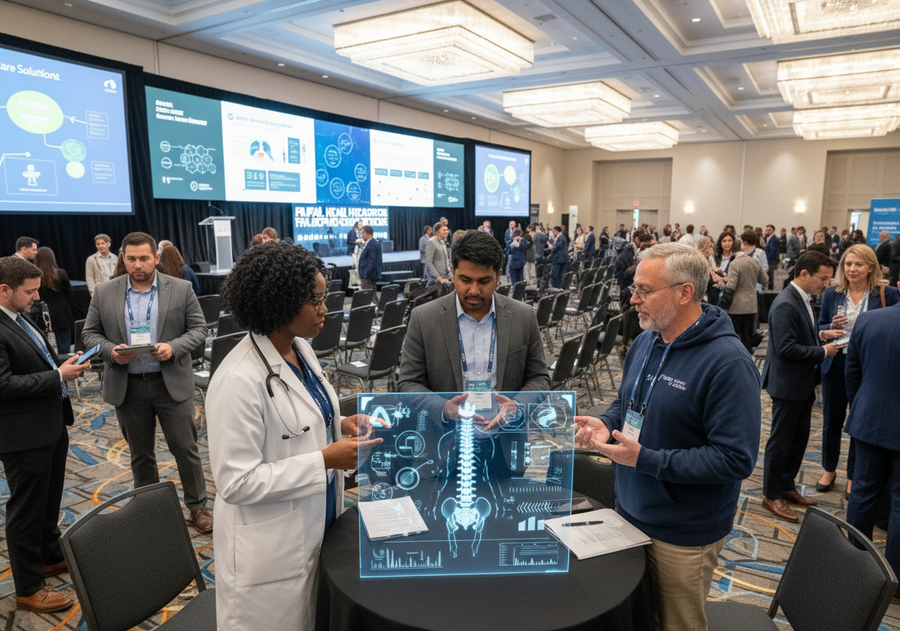
'Patients in rural America should not receive a lower standard of clinical insight simply because they live far from an academic medical center.' That statement, from high school researcher Aviraj Soin, cuts straight to the heart of one of healthcare’s most persistent inequities — geographic disparity in access to specialized care.
Soin isn’t waiting until he’s in med school or backed by venture capital to tackle it. While still in high school, he’s developed an AI model aimed at supporting rural clinicians in diagnosing complex spine conditions — not replacing them, but augmenting their decision-making with insights typically concentrated in urban academic centers.
What stands out isn’t just the technical ambition, but the intentionality behind it. He started with a problem he understood personally, growing up in Yellow Springs, Ohio. He focused on spinal pain — a condition where symptoms overlap and specialist access is limited — and built an AI tool that analyzes patient records across multiple dimensions: pain severity, location, duration, treatments tried, and comorbidities. In early testing with 250 patient records, the model looked for patterns linked to four specific spinal conditions, serving as a kind of 'second set of analytical eyes' for clinicians.
Even more promising? His collaboration with physicians from Yale and Dartmouth. Their co-authored review in Healthcare underscores a critical point: AI in clinical settings must be explainable, rigorously validated, and designed to fit into real-world workflows. It’s not about flashy automation — it’s about practical support that preserves physician oversight.
Soin’s vision extends beyond spine care. If the model proves effective, the framework could be adapted to cardiology and other specialties — a scalable approach to democratizing expertise. And that’s where this story resonates most deeply for entrepreneurs: it’s a masterclass in solving real problems with focused, human-centered innovation.
This isn’t speculative tech futurism. It’s a grounded, ethical, and urgently needed application of AI in healthcare — led by someone who hasn’t even graduated high school.
Curious how one young innovator is redefining what’s possible at the intersection of medicine and machine learning? The full story offers inspiration — and a blueprint.
This post has originally been written by Entrepreneur.com on Sat, Sep 26, 26. Find the original post here at Entrepreneur.com

Connie Harrell
Working as an analyst with investors and entrepreneurs to gain the best ROI possible.
Related Posts

Oura and Whoop Dominate Screenless Wearables. N...
Apple is prototyping a screenless health tracker, signaling a potential threat to Whoop and Oura ...

How Entrepreneurship Helps Working Moms Achieve...
Can entrepreneurship give working moms the flexibility they need? Two franchise owners share how ...

Having the Latest AI Model Can Actually Be a Ba...
A better AI model isn’t always a better business move. Here’s how to know when an upgrade truly p...

Your Products Could Be Invisible to ChatGPT. He...
Your product page might rank on Google but remain invisible to AI shoppers. Here's how to check i...
This Overlooked Infrastructure Problem Can Brea...
How outdated payment systems can silently sabotage growth — and what to do about it.
AI & The Next Economy Live
AI isn’t failing because of bad models — it’s failing because of unclear ownership. Here’s how le...
0 comments